
4190.428: Introduction to Machine Learning
Fall 2026
Fall 2026
Machine learning systems have broad applications across humanities, arts, science and engineering disciplines, consumer electronics, and modern computing systems. In this course, students will learn the fundamental concepts and principles of machine learning, including supervised, unsupervised and reinforcement learning. The course introduces the underlying model architectures, algorithms, and mathematical foundations of these learning paradigms.
Designed as an introductory course, it covers classical methods for pattern recognition, probabilistic modeling and sequential decision‑making, while also introducing recent advances in representation learning and scalable generative modeling.
Lectures: Tuesdays and Thursdays, 5:00–6:15 pm in Rm 209, Bldg 302.
Instructor office hours: Mondays 11:30 am–12:00 pm in Rm 321, Bldg 302; discussion about course material and projects.
TA office hours: questions about homework and lectures.
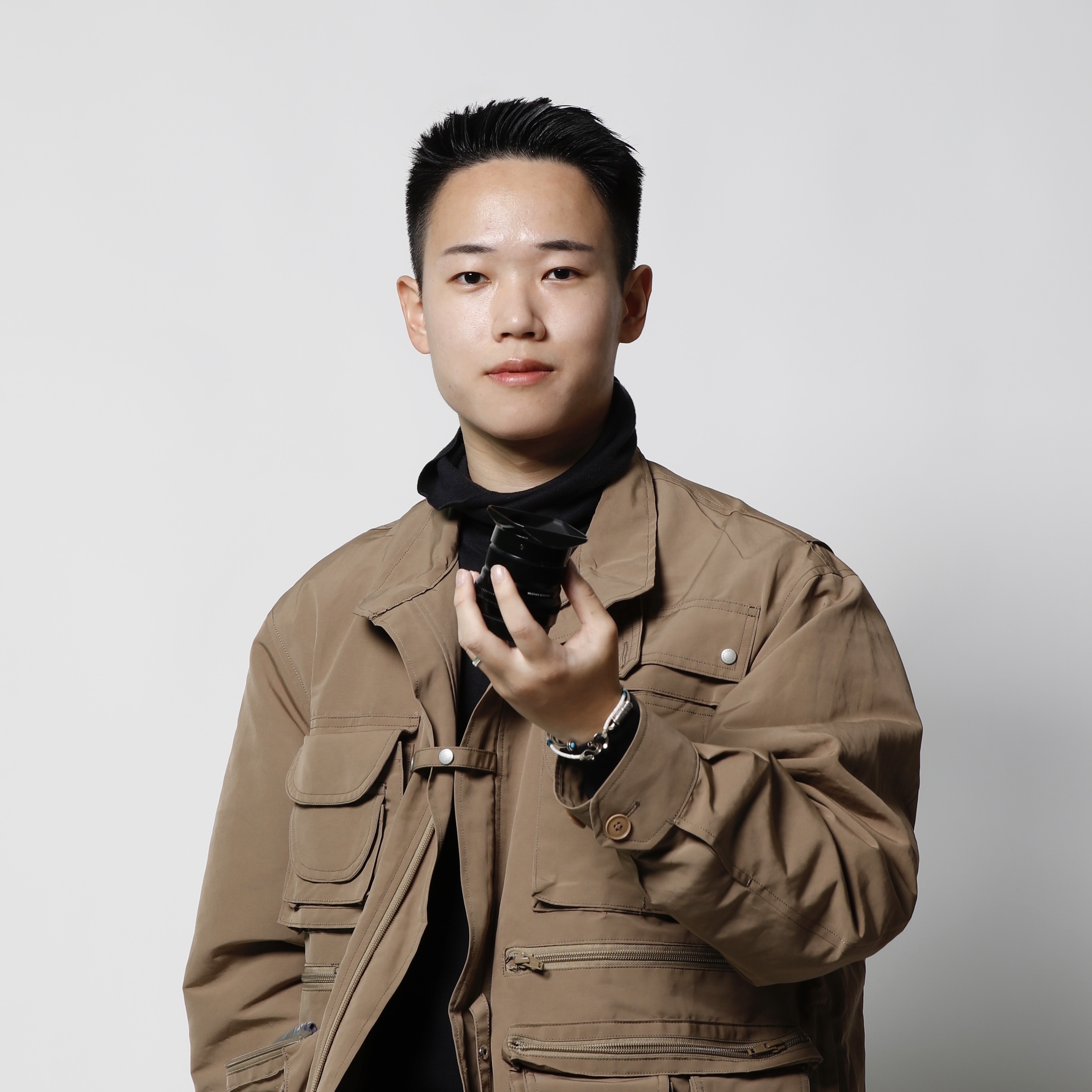
Yujin's OH: Tuesdays 6:15–7:15 pm in Rm 209, Bldg 302 (the lecture room).
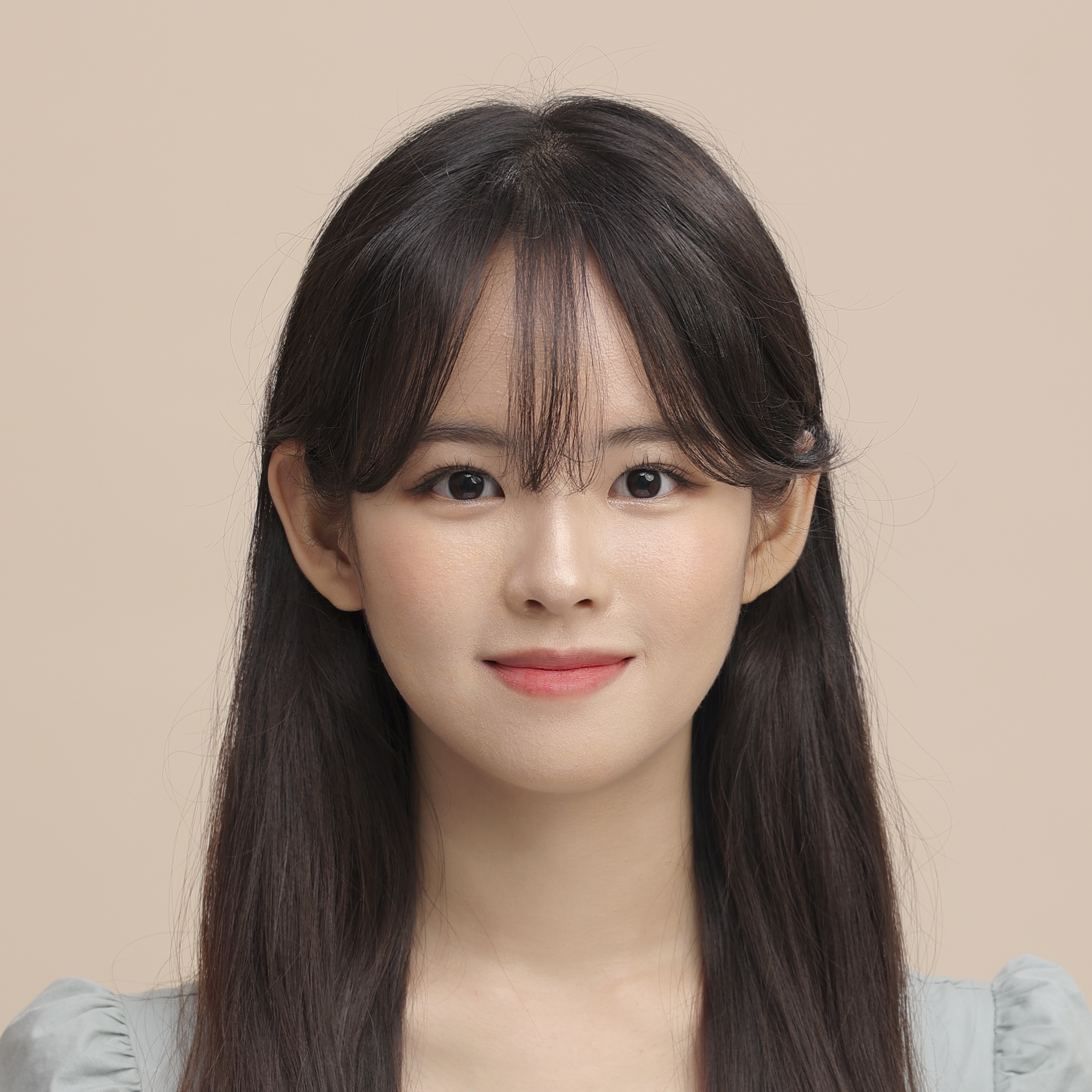
Jinwoo's OH: Thursdays 4:00–5:00 pm in Rm 209, Bldg 302 (the lecture room).
To contact the TAs, please email
ml-fall-2026-teaching-staff@reality.snu.ac.kr.
Textbook: There is no required textbook for the course; links to readings and course notes are provided in the Schedule.
Contact: Course announcements and general information will be posted on the course forum on eTL. To contact the teaching staff, please email ml-fall-2026-teaching-staff@reality.snu.ac.kr.
The table below outlines the weekly topics and key milestones. Slides and readings will be linked here as the course progresses.
| Wk | Date | Event | Description | Files | Readings |
|---|---|---|---|---|---|
| 1 | 9/1 | Lecture 1 | Introduction, Overview, Fast Forward | [slides] | |
| 9/3 | Lecture 2 | Supervised learning, gradient descent, linear regression | [slides] | [model vis.] [GD vis.] |
|
| 2 | 9/8 | Lecture 3 | Classification, generalized linear models | [slides] | |
| 9/10 | Lecture 4 | Feature representation, kernel methods | [slides] | [feature vis.] | |
| 3 | 9/15 | Lecture 5 | Support vector machines | [slides] | |
| 9/17 | Lecture 6 | Neural networks | [slides] | ||
| 9/18 | HW 1 out | [HW1] [HW1 Sol.] | |||
| 4 | 9/22 | Lecture 7 | Supervised learning review, K-means, GMMs | [slides] | |
| 9/24 | No class | Chuseok holiday (추석) | |||
| 5 | 9/29 | Lecture 8 | EM, principal component analysis | [slides] | |
| 10/1 | Lecture 9 | Principal component analysis, representation learning | [slides] | ||
| 10/2 | HW 1 due | Homework 1 due at 11:59 pm | |||
| 10/2 | HW 2 out | [HW2] [HW2 Sol.] | |||
| 6 | 10/6 | Lecture 10 | Variational auto-encoder | [slides] | [VAE paper] |
| 10/8 | Lecture 11 | Embeddings, contrastive learning | [slides] | [clustering] | |
| 7 | 10/13 | Lecture 12 | Embeddings, ICA | [slides] | |
| 10/15 | Lecture 13 | Unsupervised learning review | [slides] | ||
| 10/16 | HW 2 due | Homework 2 due at 11:59 pm | |||
| 8 | 10/20 | Midterm | In-class exam (closed book) | ||
| 10/22 | No class | Midterm break | |||
| 9 | 10/27 | Lecture 15 | VAE recap, normalizing flows | ||
| 10/29 | Lecture 16 | Generative adversarial networks (GANs) | |||
| 10 | 11/3 | Lecture 17 | Diffusion models, score-based models | ||
| 11/5 | Lecture 18 | Diffusion models, score-based models (ctnd) | |||
| 11/6 | HW 3 out | ||||
| 11 | 11/10 | Lecture 19 | Flow matching | ||
| 11/12 | Lecture 20 | TBA | |||
| 12 | 11/17 | Lecture 21 | Sequential models | ||
| 11/19 | Lecture 22 | Transformers | |||
| 11/20 | HW 3 due | Homework 3 due at 11:59 pm | |||
| 11/21 | HW 4 out | ||||
| 13 | 11/24 | Lecture 23 | Markov decision processes | ||
| 11/26 | Lecture 24 | Guest lecture Sungyoon Kim (Stanford University) |
|||
| 14 | 12/1 | Lecture 25 | Value/policy iteration, continuous-state MDPs | ||
| 12/3 | Lecture 26 | Guest lecture Dr. Wanhee Lee (Tesla), on self-supervised learning |
|||
| 12/4 | HW 4 due | Homework 4 due at 11:59 pm | |||
| 15 | 12/8 | Lecture 27 | Policy gradient | ||
| 12/10 | Final Exam | In-class exam (closed book) | |||
| 16 | 12/15 | Lecture 28 | Discussion on final Last day of class |
All assignments should be submitted on eTL. Course announcements, lecture materials and the discussion forum also live there.
There will be 4 homework assignments (see Schedule) in this class, each worth 25% of the assignment grade. These assignments contain theoretical questions as well as implementations of techniques that we discuss in class. Please refer to the assignment writeups (available in the Files column of the Schedule) for details. After you finish, submit your code and report on eTL.
Collaboration Policy: Students are permitted to work together on homework assignments in small groups. However, while students can discuss the assignments together, they must compose their solutions individually. Students must not view or copy code of other students or solutions available on the internet. Names of collaborators must be listed on submitted assignments. Submitting plagiarized solutions is an academic offense and can have severe penalties.
AI Assistants Policy: Generative AI may be used as a supplementary learning tool in this course. Students may use generative AI to explore ideas or topics needed to complete assignments and to analyze data. However, if generative AI is used to complete an assignment, the name of the tool used, the process of its use, and the generated content must be clearly stated in the assignment.
There will be an in-class, closed-book midterm on October 20.
There will be an in-class, closed-book final exam on December 10.
Attendance does not count toward your grade. However, by university policy, students who are absent for more than 1/3 of class days will receive an “F” or “U” grade. If you do not expect to be able to meet this requirement, we recommend that you not take this course; please contact the teaching staff in advance.
We gratefully thank Jaesik Park for generously sharing his course materials, on which much of this class is based. Some of the materials used in class build on those from other instructors, as noted in the slides. Feel free to use these slides for academic or research purposes, but please maintain all acknowledgments.
This webpage is based on this website.